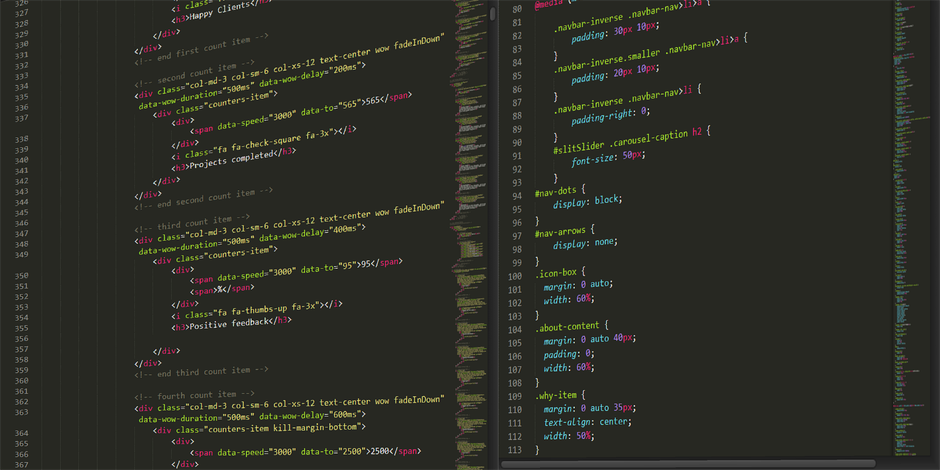
For people who have never written a program or have only copied fragments from tutorials. The first weeks stay close to the editor: variables, control flow, functions, and small programs you can run and break on purpose. Reading existing code comes before writing your own, which builds intuition faster than isolated syntax drills.
Assumes you can already write a working script. Here the focus shifts to structure: separating concerns, handling errors instead of ignoring them, writing tests that catch real regressions, and using version control as a daily habit rather than a rescue tool. Project work runs in small teams with code review at each step.
For those who want to understand what happens under an application: networks, databases, deployment, and the operating system layer. Less time in the editor, more time tracing requests and reading logs. Suits people moving from writing features toward keeping systems running and diagnosing why they stop.
Capabilities across the institute
Small, well-structured codebases come first. Students trace how data moves between functions, note naming and error handling, then write their own modules against the same patterns.
From a single-file script to a small tool other people run: input validation, logging, readable error messages, and a deployment step that does not depend on one machine.
Modules, interfaces, state, and version control taught as daily habits rather than theory. Commit history is treated as documentation, and branches stay short enough to review.
How services talk to each other, where data is stored, and what changes once a program has to keep running while someone else depends on it.
From first enquiry to a working result: how the institute handles each learning request.
You describe what you already know and what you want to build. A short conversation covers your background, available hours per week, and whether the target is a first programming job, a switch into software engineering, or a specific tool your team uses.
Based on that conversation, we assemble a sequence of modules: programming fundamentals, data structures, application development, and the digital systems topics that fit your direction. Each module lists what it covers and what you should be able to do before starting it.
Learning happens in the editor, not in slides. You work through small codebases, trace how data moves between functions, and write your own modules with review from an instructor. Exercises are checked for readability and error handling, not only for correct output.
Every track ends with a project that someone else could actually run: a small service, an internal tool, or a data-processing script. You present it, receive written feedback, and revise it. The revision round is where most of the real learning happens.
You leave with a documented project, a written summary of the modules you completed, and a clear picture of which topics to continue on your own. If you want to go further, we suggest the next module sequence rather than leaving you to guess.